It was early July in the loud and crowded streets of Hong Kong.

I’d had my fair share of Hong Kong by then. A 4-day stay in this bustling city had left me mesmerized by its lights, delights, eats, streets – a culturally fascinating melting pot. It was a beautiful city, too, with rolling hills dotting the outskirts of the island.

But, like almost any large city, my cup of enjoyment became filled to its rim and I was ready to move onto somewhere with sparser crowds and wider spaces. And as luck would have, that somewhere else was one of my favorite places in the world: China.
Now you may be wondering, but weren’t you already in China? Technically, by some measures, yes. Hong Kong is considered by the Chinese (and many other parts of the world) as a Chinese territory. Even Lonely Planet tossed it into their China book. And to some, it may feel like China. Sure, the language, the food, the people, and the culture seems very Chinese at first glance, but to me, Hong Kong lacked an unmistakable Chinese vibe: some combination of a foreigner’s lack of understanding of what’s going on, a certain rawness of human interaction, a sense of chaos, and a realization that no one around you gives a shit about that chaos. China just is, as it is.

The day before my overland journey began, I looked online for a hostel somewhere across the border into mainland China. I had 3 or 4 days to kill before I had to be in Guangzhou for a tourism conference. Shenzhen seemed like an obvious choice of a destination: a well-known city located right across the border. I browsed a list of hostels, contemplating my options, when an odd pinpoint suddenly appeared – located on a small peninsula 50 kilometers to the east of Shenzhen.

The hostel was called the Stone Fortress Hostel, the only hostel in the foreseeable area located outside the Shenzhen city limits. It was located in the Dapeng Fortress Village (Dapengsuocheng), an ancient walled town. It looked remote-ish and perhaps even nature-y. And, the hostel page even provided directions via public transport from the Hong Kong border. What more did I need?! I was in.

After making my way to the Chinese border via Hong Kong public transit, I began referring to the hostel’s directions. Hopping on a bus after the border crossing, I was led to downtown Shenzhen, where I hopped off, walked a couple hundred feet and waited for another bus. It took a few tries to realize I was waiting at the wrong spot, but eventually I was able to time it right and hop onto a second bus that would take me out of downtown Shenzhen. We drove past cargo ships, insanely tall highway passes, and countryside that slowly became less and less polluted. Wherever we were heading, I liked the looks of it.
The bus came to a stop and I heard “get off” (in my kindergarten-level Mandarin) as all of the passengers began disembarking from the bus. My trusty hostel directions instructed me to find a certain bus line at a certain bus stop somewhere near my current location, which I stumbled upon after a hearty 15-minute wander. There were no foreigners in sight and not a lick of English could be heard – a strong reminder that I wasn’t in Hong Kong anymore. At last, I found my way onto the final bus that would take me to my destination: the Dapeng Fortress.

The Dapeng Fortress was a small village enclosed by a stone wall. The main street was filled with snack stalls and small souvenir shops, but as soon as you took a turn onto one of the many alleys, you’d be surrounded by grey walls, aesthetic roofs, clotheslines, and most of all, a look into normal Chinese life. During the day you could spot women hanging clothes to dry on intertwining rows of clothesline, and at night you could peer into the many open doors of Chinese family homes, watching as they shared plates of food with each other at their kitchen tables.
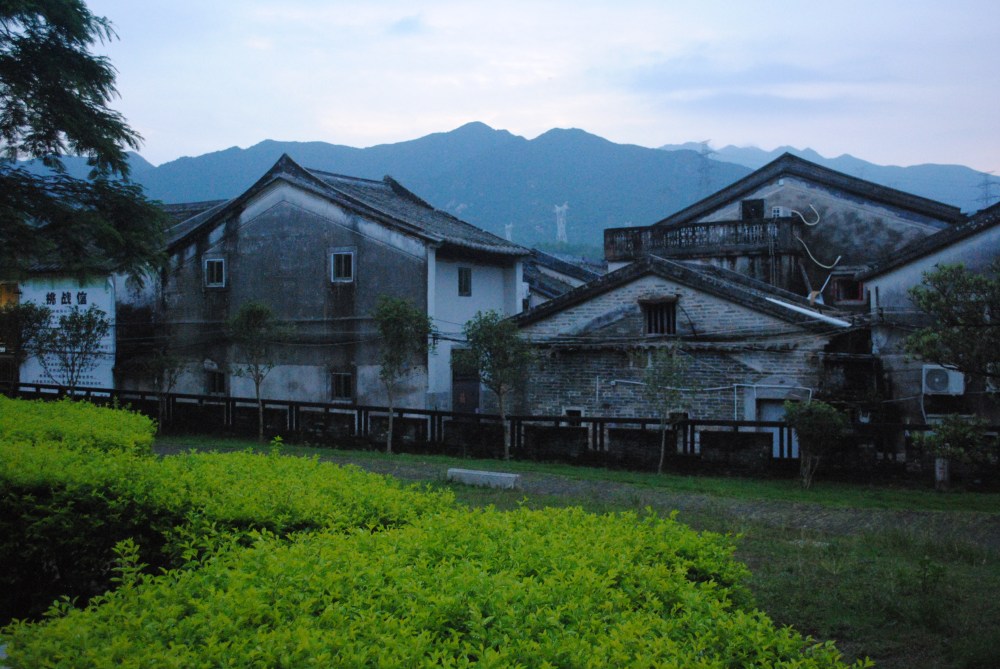
The hostel consisted of one 6-bed room and one single-bed room, run by an owner and a few young Chinese twenty-somethings. Upon my arrival, all of them looked genuinely surprised to see me, an early sign that foreigners didn’t stumble upon this place very often. I was able to converse with the staff with a bit of Mandarin, which seemed to be the only language available to me on my first day in the village. Luckily, on the second day, Nini (a Chinese tai-chi teacher) checked into the hostel with a good amount of English under her belt. She paved the way for a bunch of activities surrounding the village – on our first day of hanging out, she invited me to join her for lunch at the nearby Buddhist temple. We gathered alongside monks in a mess hall and gorged on vegetarian Chinese food in complete silence (while getting only a few strange looks from the monks).


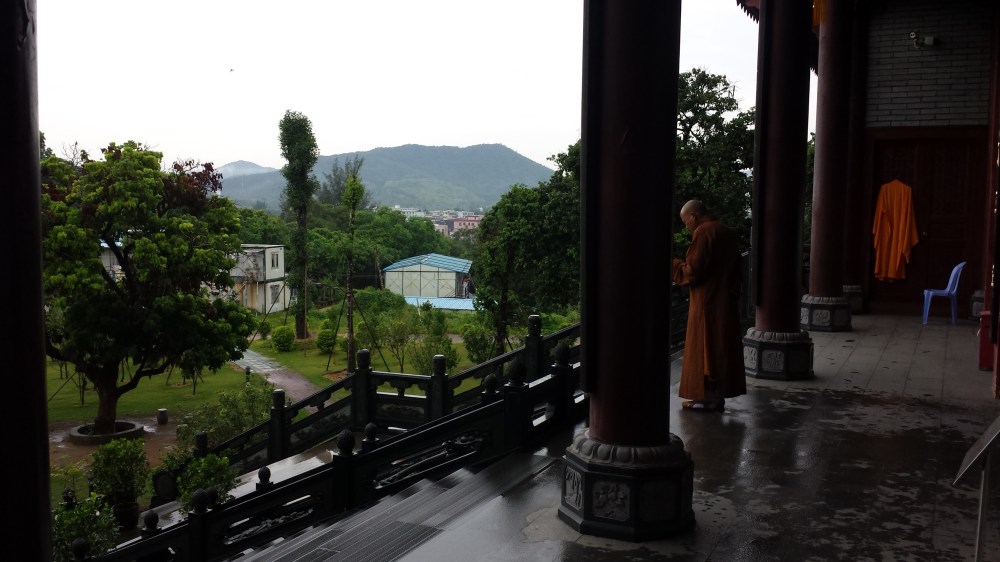
Other adventures ranged from playing a game of pick-up basketball with some locals, taking frequent solo hikes to the mountain above the temple, and discovering that Dapeng Fortress Village happened to be located a few blocks away from a popular Chinese beach resort. I followed Nini to this beach resort to check it out. And of course, in a very China fashion, it was packed.


I was led to a beach bar with a European DJ, was handed a Corona, and spent the next few hours listening (and occasionally contributing) to a conversation with Nini and a few others in Mandarin. I met a few other foreigners who worked in Shenzhen and often came to this town on the weekends to relax. It was refreshing to hear some English, but it was more so motivational to hear how incredible their Mandarin was to help me solidify my goal of being that good at Mandarin someday.
Above all else, I was reminded in Dapeng of the friendliness and curiosity of the local Chinese. From the kind businessman whom I met in the temple to the twenty-somethings who let me sit in on their guitar jam-session (all Chinese songs with the exception of “I’m Yours” by Jason Mraz), I was reminded again of how much a little bit of Mandarin can get you when traveling in China, and of how rewarding your interactions with locals can be – even rewarding enough to offset the language barrier and crowds that make for some difficult days when traveling through this incredible country.

And, of course, the solo wanders made this mini-trip to Dapeng all the more incredible. It allowed me to reflect on my first time returning to China since my semester in Beijing in 2014, the takeaways as I was nearing the end of my 6-week trip to Asia (from Singapore to Indonesia, Hong Kong, and the final stop of China), and some thoughts to prepare me fore my career that I’d be starting in Connecticut in only two weeks time.


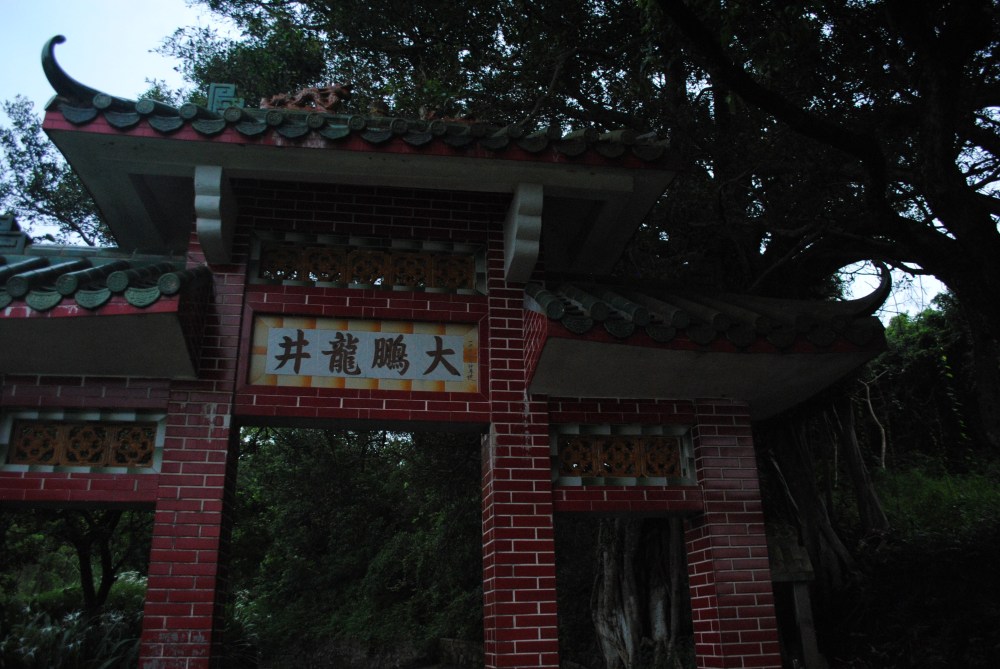
As I boarded a bus out of Dapeng and back towards Shenzhen and onto Guangzhou, I felt nothing but thankful for the people, views, and moments of serenity that Dapeng had given me. For the first time in over a year, a Chinese fire had begun to burn in the back of my mind.
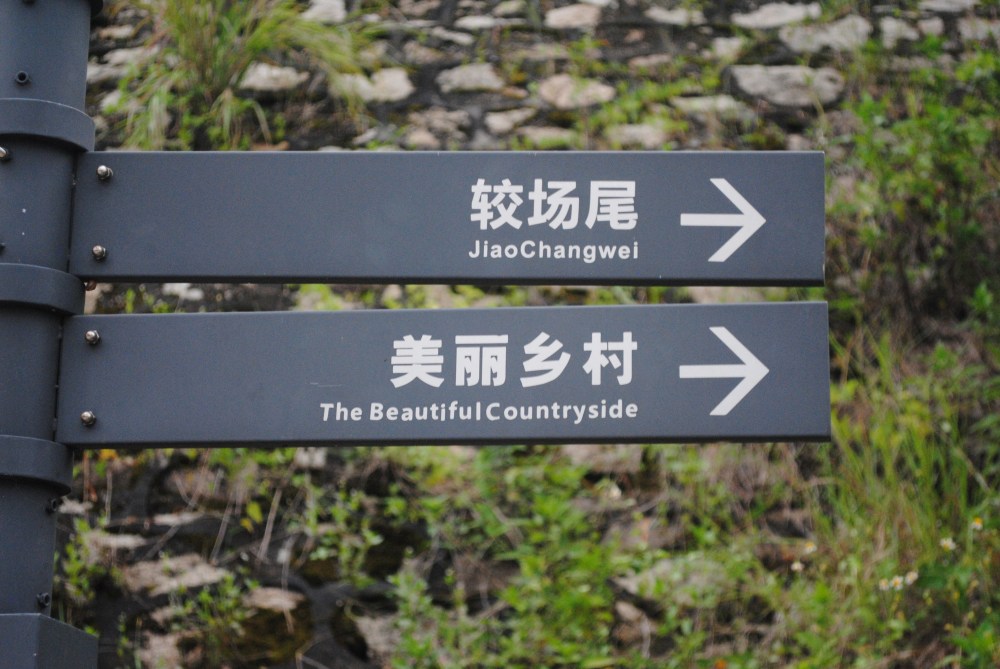
Until next time 中国…
 Leah vs. The World
Love reading about your adventures! Thanks for sharing! How are you doing?
Are you getting around ok?
Hi Carol, thanks for commenting! I’m doing pretty good…hoping to be off crutches in the next few weeks.
I’m so happy I found your blog! I lived in Guilin for two years, and hearing about your adventures makes me miss China. Keep exploring and inspiring!
Thank you!! Glad you stumbled upon it. Guilin is AWESOME!